Introduction
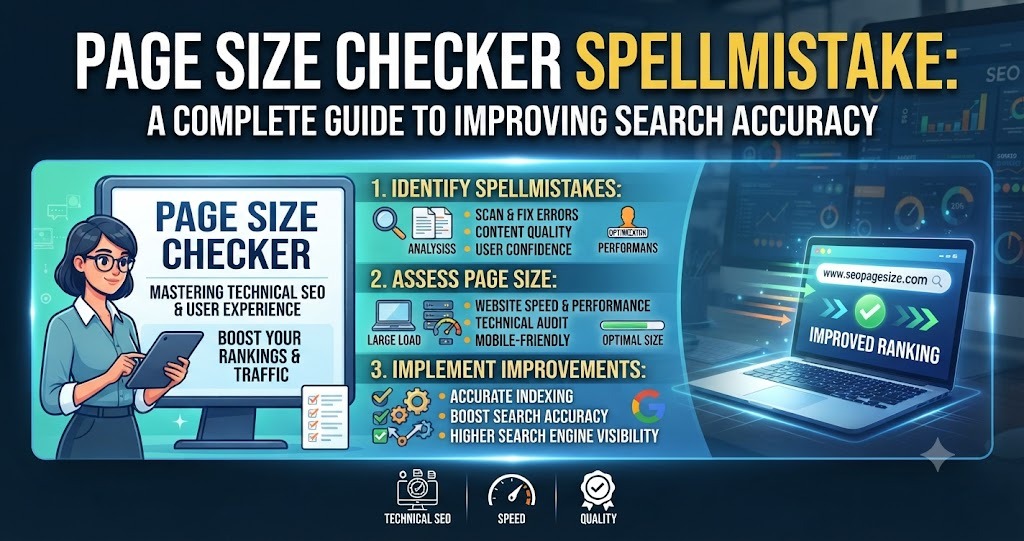
The keyword “page size checker spellmistake” is commonly searched by people looking for website optimization tools but accidentally typing incorrect spellings. Even a small typing error can lead to unrelated search results, making it difficult to find the right page size checker or website performance tool. Understanding the meaning of “page size checker spellmistake“ helps beginners and intermediate users improve search accuracy while saving valuable time. A page size checker is generally used to measure the total size of a webpage, including images, scripts, style sheets, fonts, and other resources that affect loading speed. Correct spelling plays an important role when searching for technical tools because accurate keywords usually produce better search results. Website owners, bloggers, developers, students, and digital marketers all benefit from learning proper terminology before searching online. This guide explains what “page size checker spell mistake” means, why it matters, practical steps for avoiding search errors, common mistakes users should avoid, frequently asked questions, expert recommendations, and useful tips for improving website optimization through accurate searches and better technical understanding.
What is Page Size Checker Spellmistake?
A page size checker spellmistake” refers to an incorrect spelling entered while searching for a page size checker or discussing website performance tools. These mistakes may include missing letters, extra characters, incorrect spacing, or similar typing errors.
Such spelling mistakes can reduce search accuracy and make it more difficult to locate reliable website optimization resources.
Why is Page Size Checker Spellmistake Important?
Understanding the page size checker’s spell mistake helps users improve search accuracy and quickly locate relevant technical resources. Correct spelling reduces confusion and provides better access to useful website analysis tools.
Accurate searches also improve productivity because users spend less time reviewing unrelated search results and more time optimizing website performance.
Detailed Step-by-Step Guide
Step 1: Verify the Search Phrase
Review your search query carefully before pressing the search button.
Step 2: Use Search Suggestions
Pay attention to suggested corrections provided by search engines when spelling mistakes are detected.
Step 3: Confirm Technical Terminology
Learn commonly used website optimization terms to reduce typing mistakes during future searches.
Step 4: Analyze Page Size
Use a page size checker to review webpage resources such as images, scripts, and style sheets.
Step 5: Optimize Website Performance
Compress large files, remove unnecessary code, and monitor webpage size regularly to improve loading speed.
Benefits of Page Size Checker Spellmistake Awareness
- Improves search accuracy.
- Saves valuable research time.
- Helps users find relevant tools quickly.
- Supports better website optimization.
- Reduces confusion during online research.
- Improves technical vocabulary.
- Encourages efficient learning.
- Enhances digital productivity.
Disadvantages / Risks
- Incorrect spelling may produce unrelated search results.
- Time may be wasted reviewing irrelevant websites.
- Beginners can become confused by incorrect terminology.
- Poor searches may delay website optimization.
- Technical misunderstandings can develop.
- Incorrect habits may continue without correction.
Common Mistakes to Avoid
Many users type search terms too quickly without reviewing spelling. Others ignore search engine suggestions that automatically identify typing errors. Some people also confuse similar technical terms and search for incorrect phrases repeatedly.
Another common mistake is assuming every page analysis tool offers identical information. Understanding each tool’s purpose helps users choose the most appropriate solution.
FAQs
1. What does “page size checker” spellmistake mean?
It refers to spelling mistakes made while searching for page size checker tools or related website optimization resources.
2. Why does spelling affect search results?
Correct spelling helps search engines understand user intent and return more relevant information.
3. What is a page size checker?
It is a tool that measures the total size of a webpage and its resources to evaluate performance.
4. Why is webpage size important?
Smaller webpages generally load faster, improving user experience and website performance.
5. Can beginners use page size checking tools?
Yes. Most tools provide simple reports that are easy to understand, even for beginners.
6. How can I avoid spelling mistakes?
Proofread search queries, learn common technical terms, and use search suggestions whenever available.
Expert Tips & Bonus Points
Keep a personal list of frequently used technical keywords to reduce spelling mistakes. Use browser autocomplete features carefully and always review search phrases before submitting them. When analyzing webpage performance, focus first on large images, unnecessary scripts, and unused resources because optimizing these elements often produces the greatest improvements. Regular practice with correct terminology strengthens technical knowledge and improves online research efficiency.
Conclusion
Understanding page size checker spellmistake helps users improve search accuracy, locate useful website optimization tools, and avoid unnecessary confusion during online research. Although spelling mistakes may appear minor, they often prevent users from finding the most relevant technical resources quickly. Correct search terminology improves productivity while supporting better website performance analysis and optimization. Beginners benefit from learning common technical vocabulary, while intermediate users develop more efficient research habits through careful attention to spelling and accurate keyword usage. Using page size checking tools regularly also helps website owners identify large files, improve loading speed, and enhance overall user experience. Combining careful spelling, accurate searches, and consistent website optimization creates stronger long-term results for blogs, business websites, educational platforms, and personal projects. By following the recommendations presented in this guide, users can improve both their search efficiency and technical understanding while making better decisions during website performance analysis. Small improvements in spelling and search accuracy often produce significant benefits over time, making attention to detail an essential part of successful website optimization.
Leave a Reply